Dicor vs. Eternabond: Which Roof Sealant Do You Actually Need?
Dicor self-leveling lap sealant and Eternabond RoofSeal tape are both excellent products — but they solve different problems. Here's how to choose between them for your specific repair.
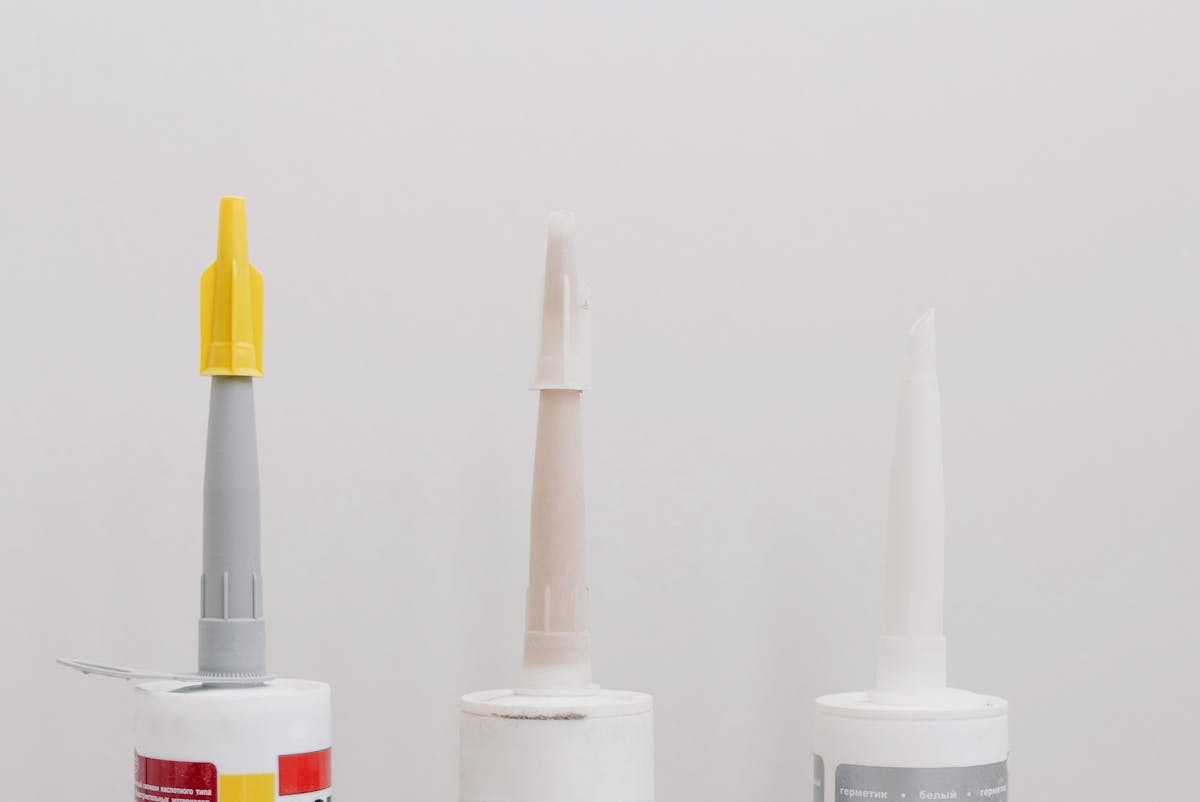
Dicor 501LSW and Eternabond RoofSeal come up in every conversation about RV and flat roof repair. Both are excellent. Both are used by professional RV technicians. And they're frequently confused with each other because they're often used on the same roof in the same session.
Here's the distinction that matters: Dicor is for joints and penetrations. Eternabond is for seams and tears.
What Dicor Does
Dicor 501LSW is a self-leveling caulk. You apply it with a caulk gun around the perimeter of vent flanges, AC unit bases, skylight curbs, and over screw heads. It flows into gaps and levels itself flat on horizontal surfaces.
Dicor bonds well to EPDM, TPO, fibreglass, and aluminium. It stays flexible through Canadian temperature swings. One tube covers about one vent flange with perimeter bead and screw coverage included.
Use Dicor for:
- Vent flanges (plumbing vents, fan vents, AC curbs)
- Screw heads in the roof field
- Where a flange meets a seam
- Any small gap or void at a roof penetration
Don't use Dicor for:
- Long open seams (it doesn't have the structural integrity to bridge a seam under movement)
- Tears or holes larger than a few millimetres (it will crack)
- Vertical surfaces (use the non-sag formulation for vertical applications)
What Eternabond Does
Eternabond RoofSeal is a microsealant tape — not a conventional adhesive tape. The adhesive layer contains a proprietary compound that penetrates and bonds to the roofing substrate at a molecular level. On EPDM, it bonds into the membrane, not just onto it.
A 50-foot roll of 4-inch tape is the standard size. It covers every linear seam on a typical RV roof with material to spare.
Use Eternabond for:
- Longitudinal seams running the length of the roof
- Transverse seams across the roof
- Rips, tears, or cuts in the membrane
- Seams that have opened up and need a structural fix
Don't use Eternabond for:
- Rounded or highly curved surfaces (it can bridge them with a heat gun but it's more difficult)
- Situations where you might need to remove the repair later (you won't)
- Damp surfaces — it needs dry conditions for proper bond
The Combination Approach
On a well-maintained RV roof, you use both products in the same session. The standard protocol:
- Apply Dicor around all vent flanges and screw heads.
- While Dicor cures (2–4 hours), prep and apply Eternabond to any open seams or tears.
- Result: every failure point addressed with the correct material.
This is why the Better Kit includes three tubes of Dicor, one roll of Eternabond, and a gallon of Liquid Rubber — the three products that collectively address every common failure mode on a flat or RV roof in a single maintenance session.
The One Question to Ask
If you're deciding which product to buy, ask: "Is the failure at a penetration point, or is it at a seam?"
Penetration point → Dicor. Seam or tear → Eternabond. Both → buy the Better Kit and do both in one day.